
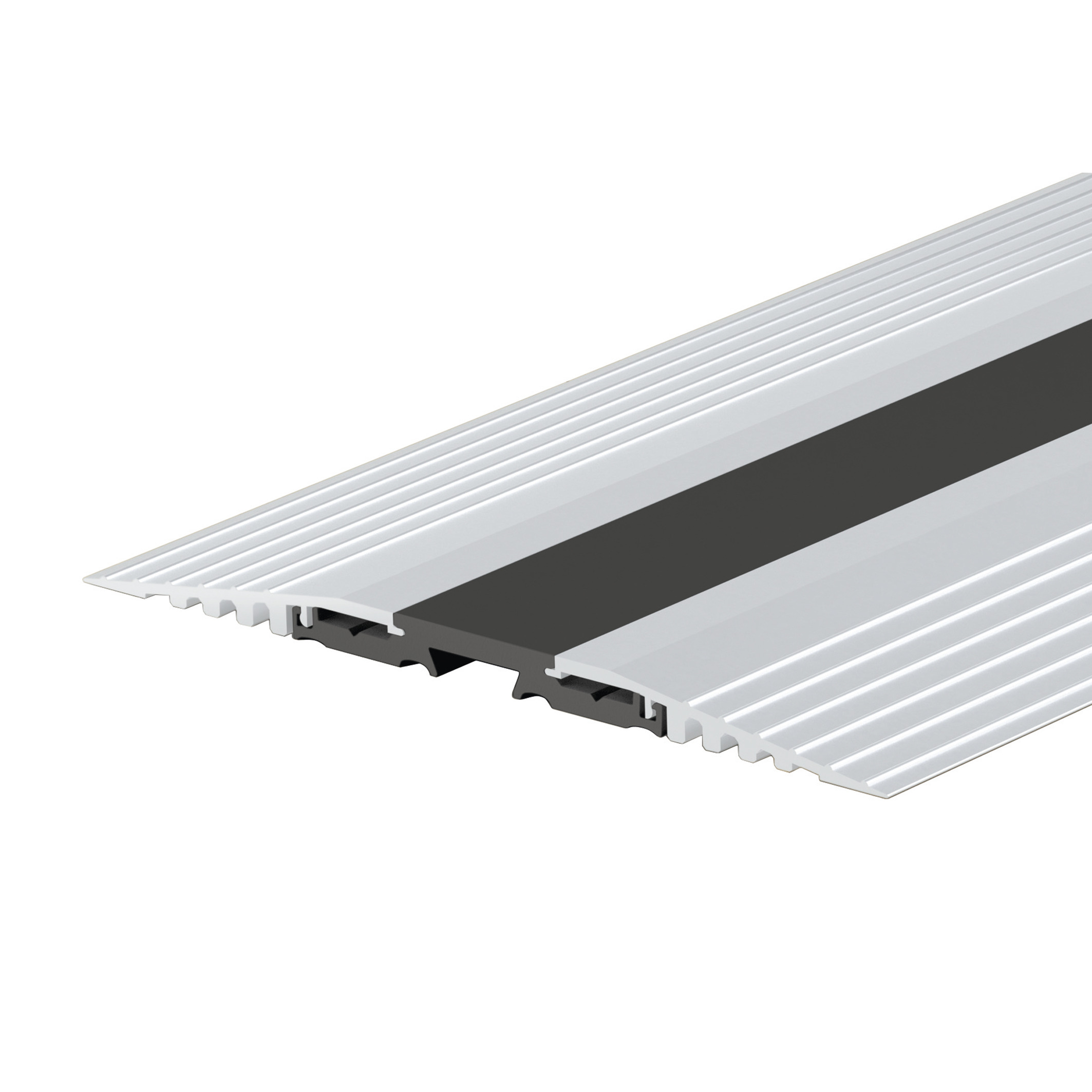
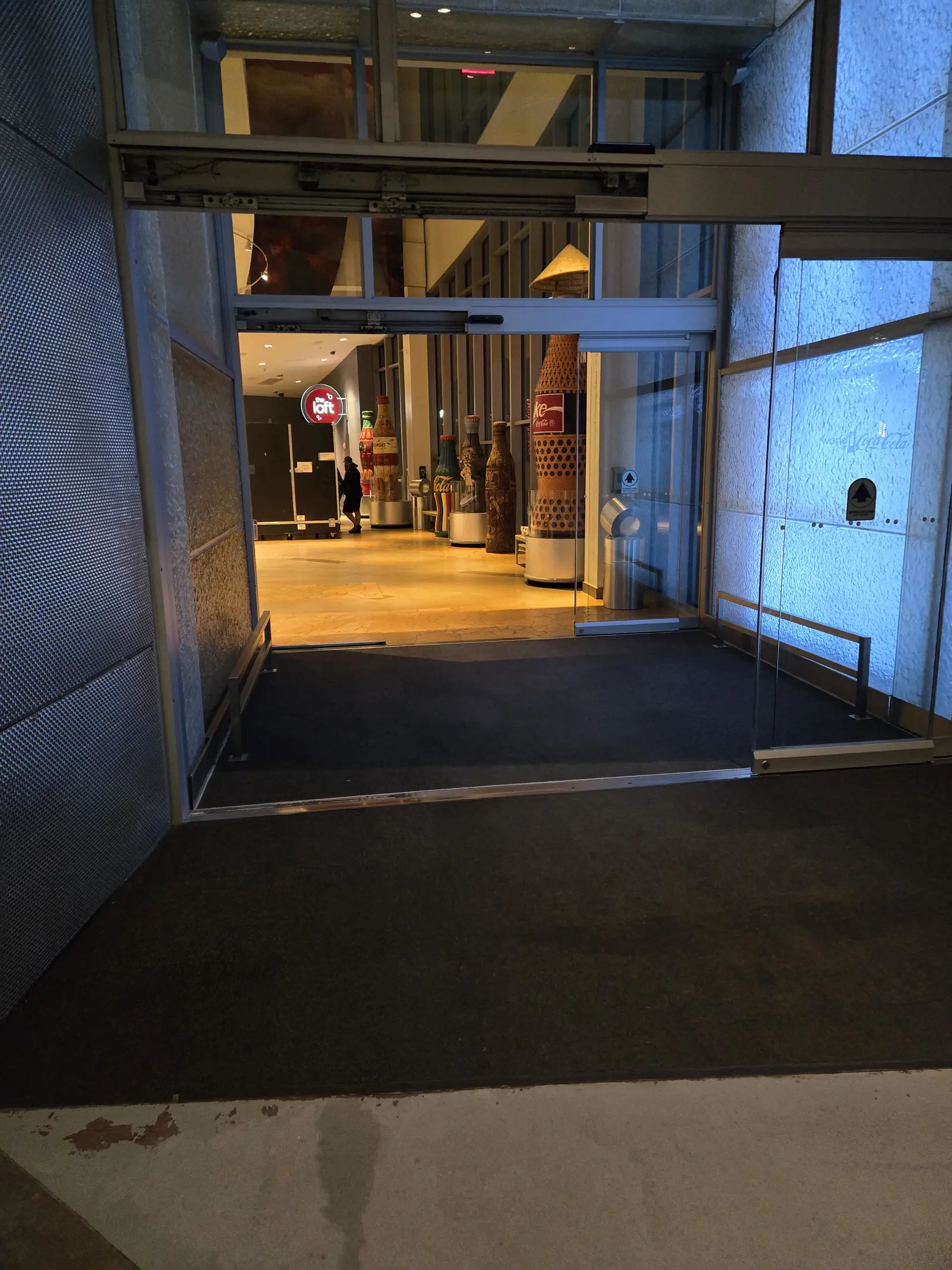
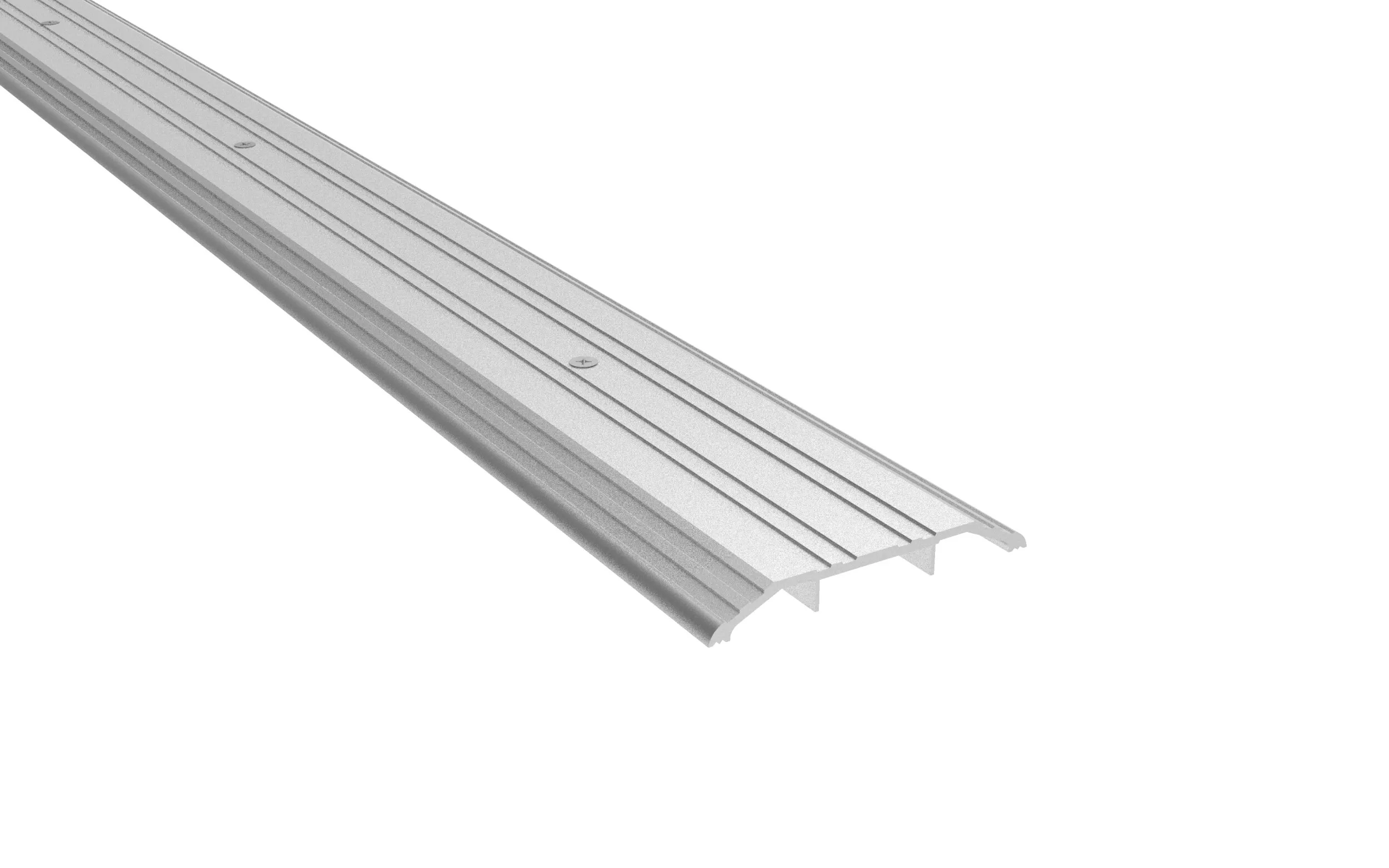
A threshold is the strip that runs across the bottom of a doorway where the door meets the floor. It seals the gap under the door and keeps water from getting through. It also smooths the transition between two floor surfaces. Manufacturers make thresholds from aluminum, rubber, bronze, or brass, depending on the application and finish.
A threshold rarely works alone. It pairs with a door bottom or sweep to close the opening at the floor. Together they block drafts, water, and dust. On exterior commercial doors, this pairing cuts energy loss and lowers utility bills.
How tall can a commercial threshold be?
On accessible entrances, threshold height falls under the ADA. The ADA caps an accessible threshold at half an inch high. Anything taller than a quarter inch needs a bevel so wheelchairs and carts roll over it. A worn or lifted threshold can also become a trip hazard. That exposes the building owner to injury claims.
What causes damage to a threshold?
A dropped door (see Hinges) usually leaves evidence on the threshold. Look for wear marks on the threshold or frame where the door rubs.
On historic or high-end entrances, thresholds are often solid brass or bronze. An experienced technician can polish and seal these to match restored door hardware.
Thresholds take heavy abuse. People walk on them all day, and rain/weather hits them constantly. When a technician services a threshold, the anchors usually need replacement. This is normal and important for the security and function of a threshold.