
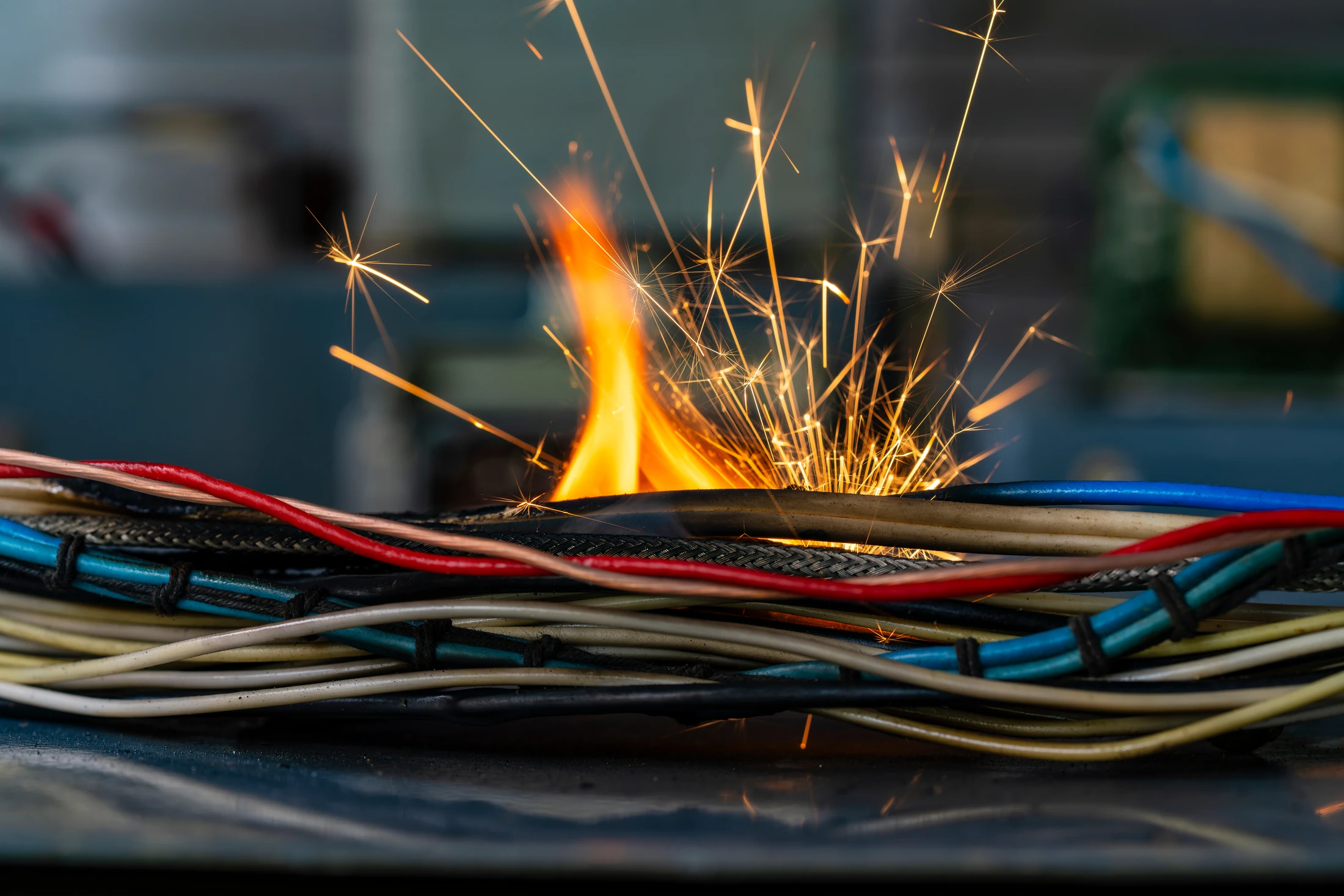
An arc is a burst of electric current that jumps across a gap between two conductors. Voltage forces the current through the air instead of a wire. The air heats up and glows white-hot. That flash of heat and light is the arc.
What causes an electrical arc?
Loose or corroded connections are a common cause. A damaged wire can also expose bare copper. When that copper touches a grounded metal surface, current arcs across. On an automatic door, that surface is often the metal header.
Some older door operators run on full 110VAC. Those units sometimes arc against the header cover. Most modern controls step voltage down to 12 to 24VDC, which lowers the risk.
Why is an arc dangerous?
An arc reaches thousands of degrees in an instant. That heat can melt metal and burn skin. It can also ignite dust or debris inside the header. An arc is a serious fire risk. Repeated arcing pits the contacts and wears down the hardware.
Watch for scorch marks, black soot, or pitting on metal parts. A buzzing or crackling sound can also signal an arc.
Never work on an energized unit. Lock out and tag out (LOTO) the power first. Then confirm the circuit is dead before you touch anything.