
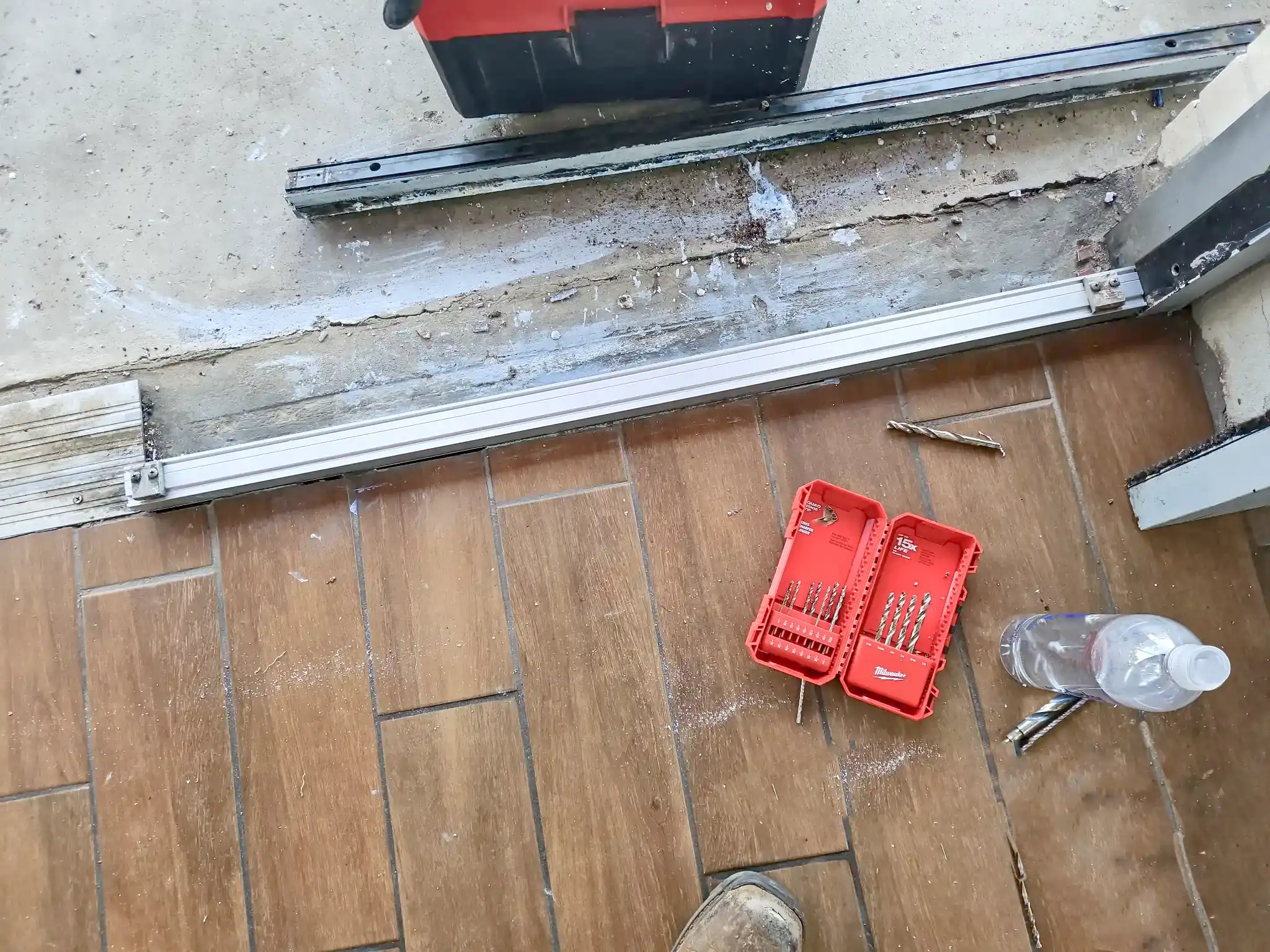
A bottom guide is a floor-level guide that keeps a sliding door panel aligned at its base. It mounts in a track along the floor. As the door moves, the guide holds the bottom of a door in line. It stops the panel from swinging out at the floor.
Two types of systems are commonly seen:
- G-guide
- Slot guide
BothG-guides and slot guides guide the bottom of the door. However, they work differently and use different parts. Most automatic door setups pair a guide with a track and a track cap.
Why does a sliding door grind at the bottom?
A worn track cap or guide widens the gap between the panel and the track. You will hear a loud grinding sound. You may see metal shavings around the door. Crews overlook this part more than any other on sliding doors. Ignore it, and the repair bill climbs fast. A maintenance contract catches this wear early.
Is a bottom guide a safety concern?
In an emergency, the door panel breaks out to clear the opening. On some layouts, the slot guide then sits exposed. That exposed guide can become a trip hazard.
How do you maintain a bottom guide?
Check the tracks for debris often. Road salt and grit pack into a G-guide and bind it. A track cap pushed up into the opening usually means the cover is missing. Never yank the plastic cap out and call it fine. That is the fastest way to wreck the track and earn a big bill.
Bottom tracks run dry. Grease does not lubricate them. A greased bottom guide collects dirt and debris instead, causing the track to bind and fail faster. Skip the grease and keep the track clean.
Many technicians will have refuse to work on doors until the client cleared grease from the track first.