
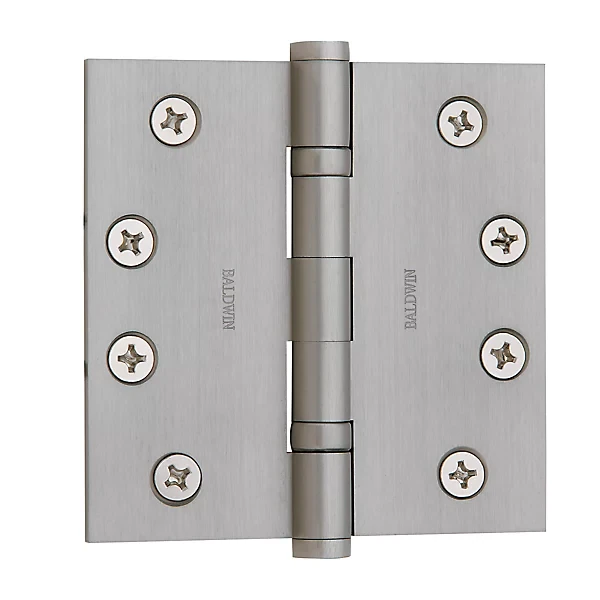
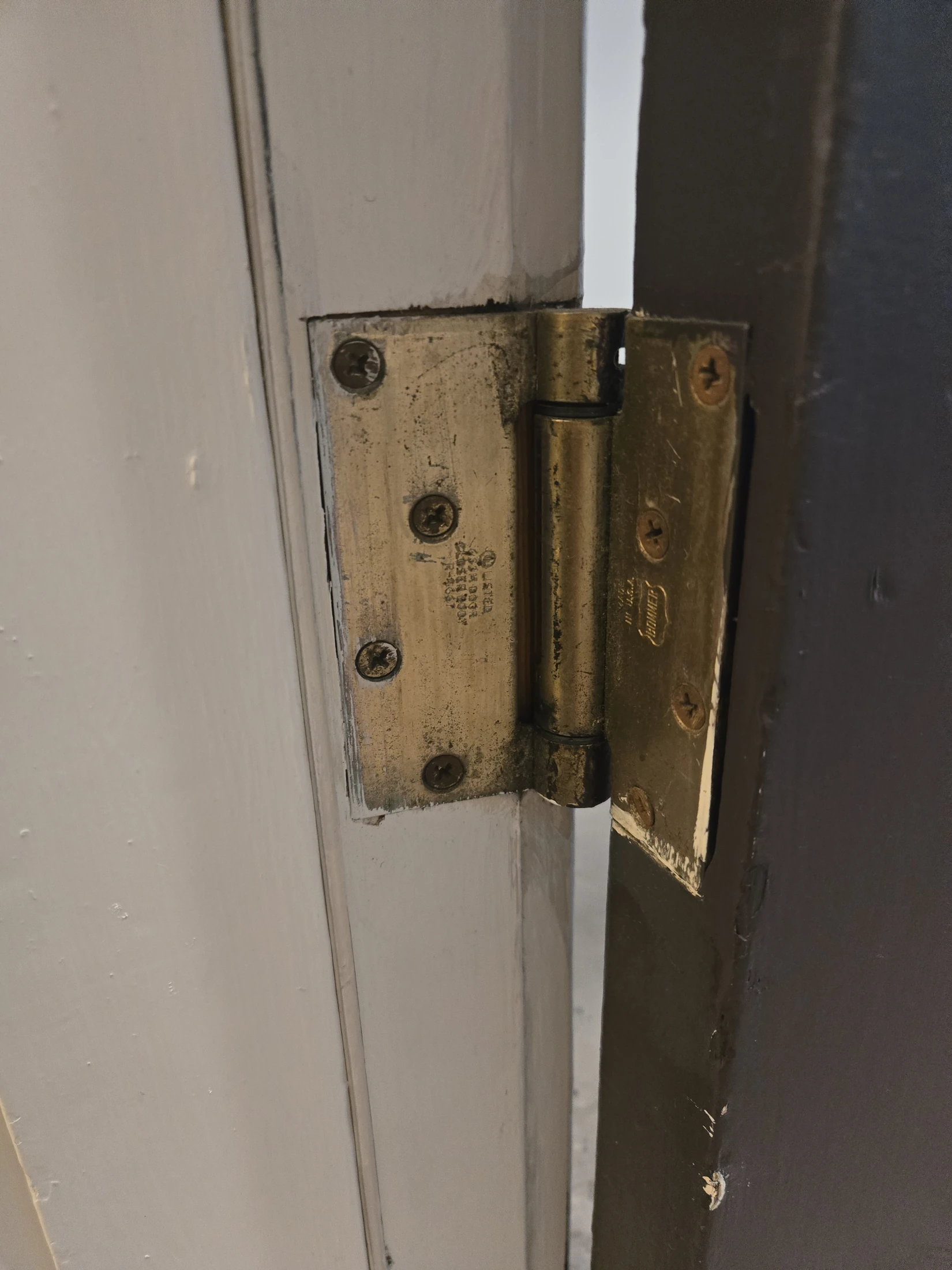
Hinges are the hardware that lets a door panel pivot inside its frame. Most doors run on one of three types.
- The butt hinge is the standard mortised hinge on most manual doors.
- Ball-bearing hinges add bearings between the knuckles, which cuts friction and wear on heavier doors.
- A continuous hinge, also called a geared or piano hinge, runs the full height of the door. This spreads the load and gives a cleaner look.
On commercial entrances, hinge choice comes down to door weight and how often the door opens. A heavy storefront door that swings hundreds of times a day wears out a light-duty hinge fast. Ball-bearing and continuous hinges hold up under that load, so we specify them on high-traffic openings.
Hinges on Exterior Doors – Security Concerns
An out-swinging door puts its hinge pins on the outside, where someone could tap them out. We install non-removable pins or security studs, so no one can lift the door off from outside.
A failing hinge or hinge pocket can cause a heavy door drop. A dropped door creates a pinch point and stops closing properly in the frame. Some signs of a failing hinge are usually visible on the door threshold. Signs of scraping or rubbing on the threshold typically indicate a failing door hinge.
You can check hinge health in seconds. Grab the door near the hinge side and push up gently. Noticeable play or movement usually points to a worn hinge, stripped screws, or a failing hinge pocket.