


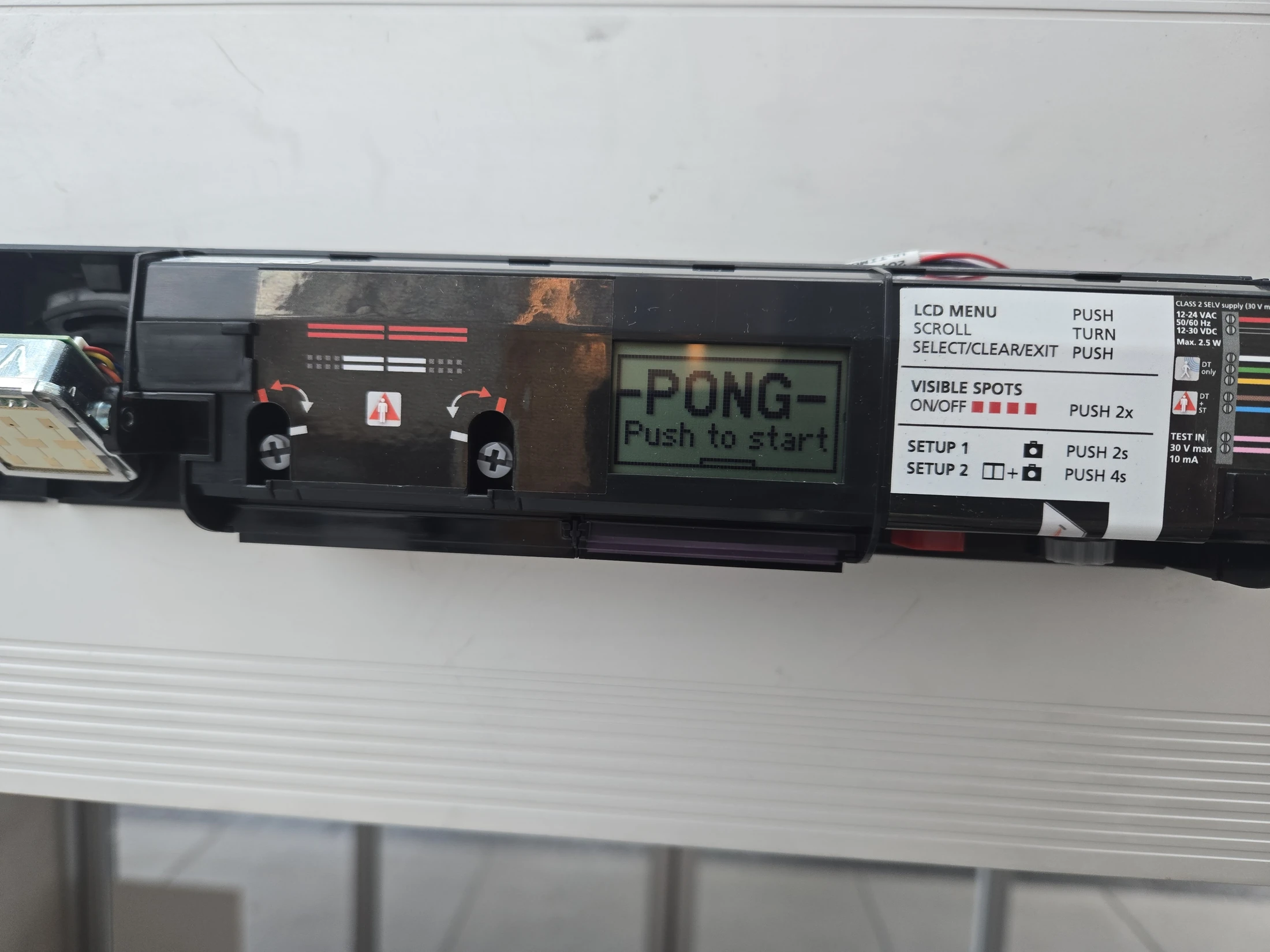
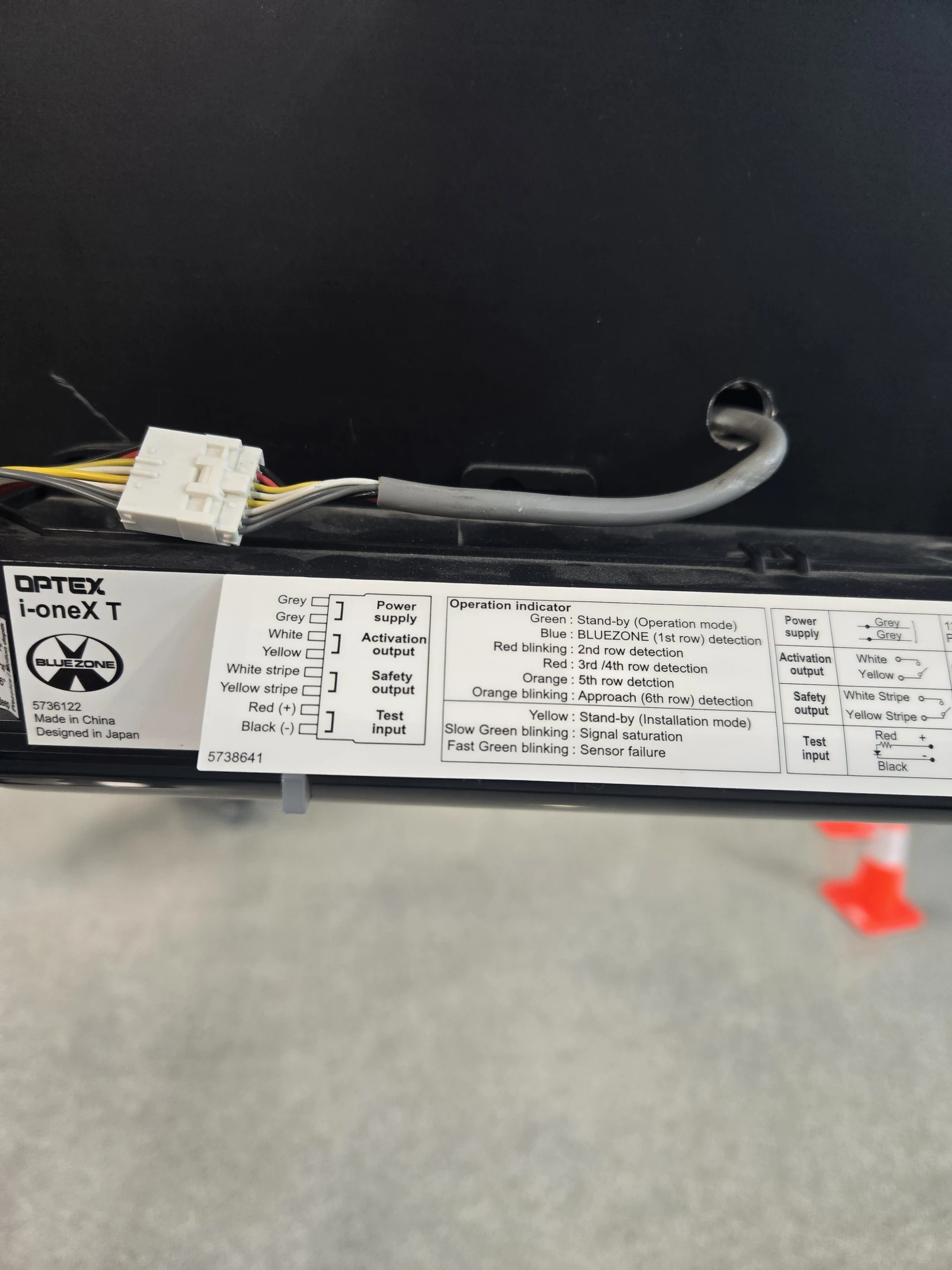
An activation sensor detects a person approaching a door and signals the control box to open it. Sliding doors use overhead motion sensors that watch the approach. Swing doors often use a push plate or a wave-to-open sensor instead.
Aim and sensitivity are the key variables in properly functioning activation sensors. A poorly aimed sensor can trigger the door for no one. It can also miss someone walking straight up to it. A technician fine-tunes both settings to match real traffic. Communicate the desired functionality to the technician who programs the sensor.
Why did my automatic door suddenly stop working?
A door that has worked well and then suddenly stopped working rarely has a positioning problem. The one exception is a sensor that has hit or struck and broken, and that damage is often visible to the trained eye. Although strikes can damage sensors, there are more common issues we see in the field. Often, dust builds up inside the sensor lens, blocking actual movement from being tracked. Something may also sit in front of the door. An object placed on or above the door can fool it too. (This is a common service call around the holidays when decorations are placed near doorways.) The sensor then reads any obstruction as a person in the door’s path and holds it open.
“Relearn” settings cause held-open doors as well. A wrong relearn setting stops the sensor from mapping its new environment. It holds the door open instead.
Do activation sensors need special tools to program?
Many do. Most BEA sensors need a handheld remote to program correctly. Newer Optex sensors add a detection zone at the threshold. That zone holds the door open while someone stands in it.
When troubleshooting a failing sensor, begin with the simple checks: obstructions, dust, and damage. To replace a damaged sensor, contact an experienced technician who specializes in automatic doors. An specialized technician can correctly troubleshoot the issue and replace the failing component. A technician who does not specialize in automatic doors may not correctly diagnose the problem, resulting in a quote for an entire door package instead of the damaged component.