Sometimes the clearest way to show why a commercial door diagnosis matters is to tell you what happened. This one cost a customer thousands he never had to spend.
The call
A customer called us about a commercial door lock that wasn’t working right. We tested it and traced the fault to the control board managing the lock. The board needed replacing, so we gave him a quote. He didn’t like the price and declined the repair.
The workaround
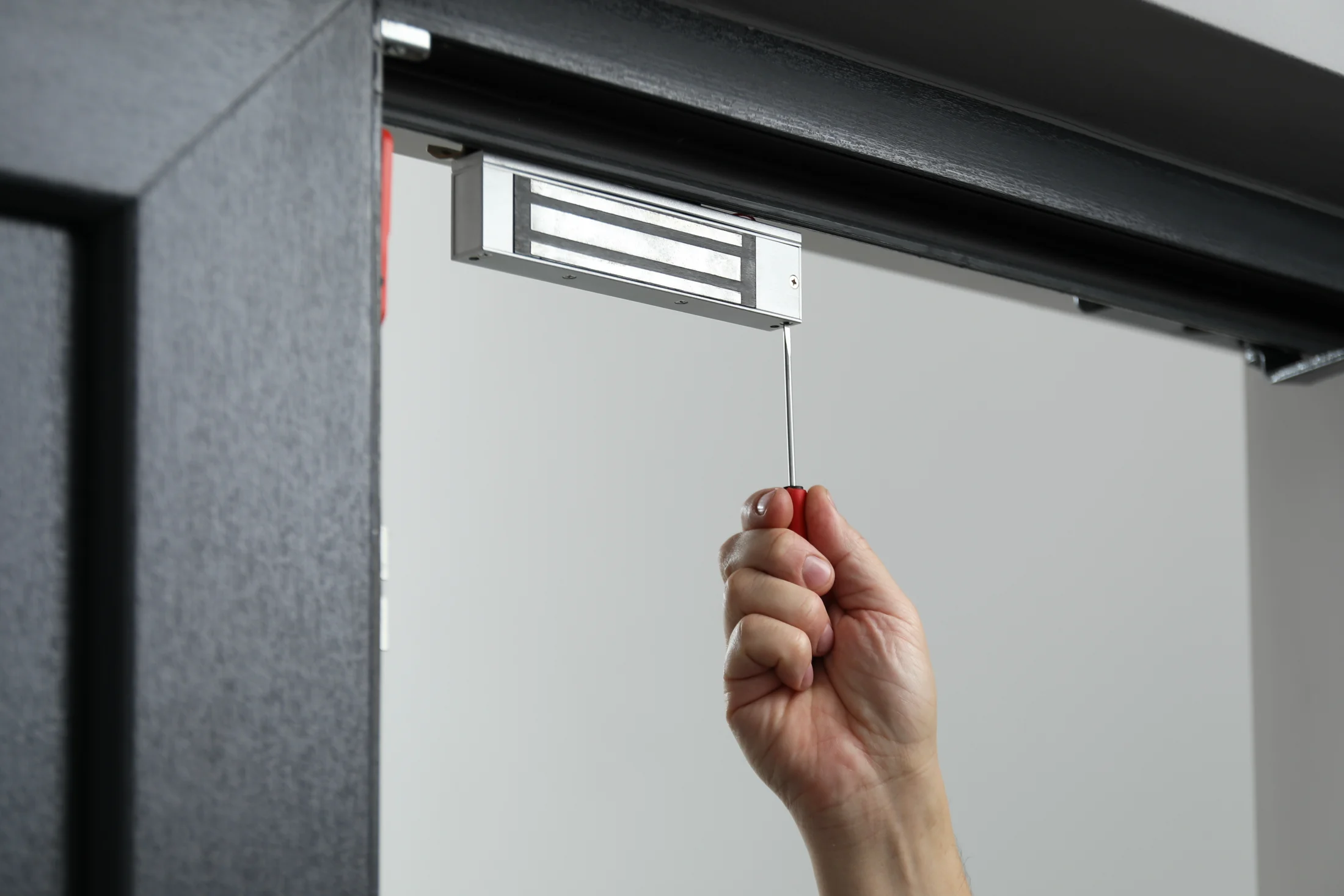
Instead, he bought a new electric strike on his own. He assumed the strike was the point of failure. He installed it, then called us back, confused about why his door still wouldn’t lock. The symptom hadn’t changed, because the part he replaced was never the problem.
What we found
When we came back, we put a testing device on both components. The results confirmed our original call. Both locks worked as intended. The control board was still the fault, exactly as it had been from the start. Guessing had changed nothing except his bill.
The real cost
By the time everything was sorted, the customer had paid for two service calls. He had also bought an electric strike he didn’t need. On top of that, he still had to replace the control board, the actual issue all along. He spent thousands more than if he had approved the first diagnosis. A quote that felt high in the moment turned into a much larger number.
Why does an accurate diagnosis matter?
An accurate diagnosis does more than treat the visible symptom. It names the root cause, so you don’t pay twice to fix one problem. On commercial hardware, a locking fault can trace to the strike, the control board, the wiring, or the power supply. Those parts look interchangeable to the eye, but only testing tells them apart. That testing is what you’re paying a technician to do.
The takeaway
When a technician traces a fault to a specific component, trust the assessment. That holds even when the price lands higher than you hoped. Swapping parts on a hunch is the expensive route, as this customer learned. A correct diagnosis up front is almost always the cheaper path in the end.